

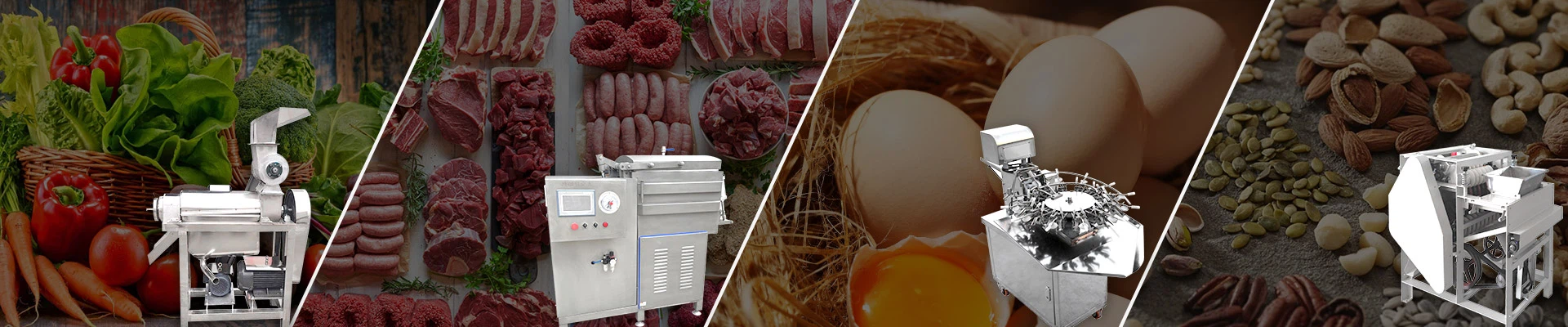
Choosing the right automatic egg breaker for your needs involves considering several key factors, ensuring you invest in a machine that's efficient, reliable, and fits your specific operational requirements.
With various models available, each offering different features and capacities, a thorough evaluation is essential. Let's delve into the crucial aspects to consider when selecting an automatic egg breaker.
1. Capacity and Throughput:
The first and foremost consideration is the volume of eggs you need to process. Automatic egg breakers come in a range of capacities, typically measured in the number of eggs cracked and separated (if applicable) per hour.
Small-scale operations (e.g., bakeries, small restaurants): If you process a few hundred to a few thousand eggs daily, a smaller capacity machine (e.g., 5,000 - 10,000 eggs/hour) might suffice. These machines are generally more compact and have lower initial costs.
Medium-scale operations (e.g., catering services, larger restaurants, small food processing units): For businesses processing tens of thousands of eggs per day, a medium-capacity machine (e.g., 10,000 - 30,000 eggs/hour) would be more appropriate. These offer a balance between throughput and space requirements.
Consider your current needs and future growth projections. Investing in an automatic egg breaker slightly larger than your immediate requirements can provide scalability for future expansion.
2. Functionality: Cracking Only vs. Cracking and Separating:
Automatic egg breakers can be categorized into two main types based on their functionality:
Cracking-only machines: These machines crack the eggshells and release the liquid egg content. They are suitable for applications where whole liquid eggs are required.

Cracking and separating machines: These more sophisticated machines crack the eggs and separate the yolks and whites. This is crucial for businesses that require separate egg components for different recipes or applications.
Determine whether you need yolk and white separation. If your operations frequently require separated egg components, investing in a cracking and separating machine will save significant time and labor compared to manual separation.
3. Hygiene and Cleanability:
Food safety is paramount in any food processing environment. Therefore, the design and materials of the automatic egg breaker are critical.
Material: Opt for machines constructed from food-grade stainless steel (e.g., 304 or 316). Stainless steel is durable, corrosion-resistant, and easy to clean and sanitize. Avoid machines with plastic or other materials that could harbor bacteria or degrade over time.
Cleaning procedures: Understand the recommended cleaning procedures for the machine. Some machines may have automated cleaning cycles, while others require manual cleaning. Ensure the cleaning process is efficient and effective.
4. Reliability and Durability:
An automatic egg breaker is a significant investment, so reliability and durability are crucial to ensure a good return on investment and minimize downtime.
Build quality: Examine the construction of the machine. Look for sturdy frames, robust components, and high-quality motors and mechanical parts.
Reputation of the manufacturer: Research the manufacturer's reputation for producing reliable and durable equipment. Read reviews and seek feedback from other users.
Maintenance requirements: Understand the regular maintenance requirements of the machine. Simpler designs with fewer moving parts tend to be more reliable and easier to maintain.


