

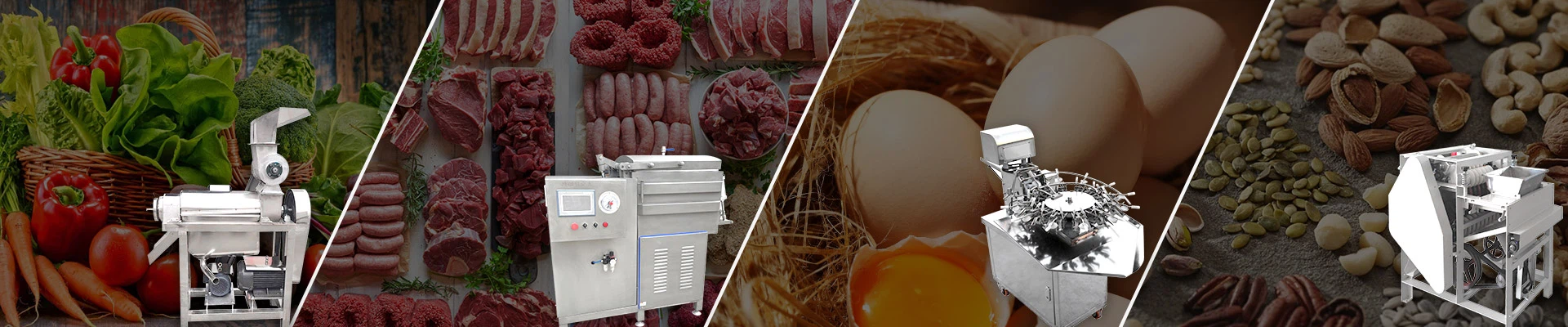
Automatic egg breaker is an important equipment in the food processing industry. Its correct operation is not only related to the service life of the equipment, but also directly affects production safety and product quality.
The following are the key points to pay attention to when using an automatic egg breaker, which are explained in detail from five aspects: equipment preparation, operating specifications, safety protection, cleaning and maintenance, and special situation handling.
Equipment preparation and inspection
Preparation work before formal use is crucial:
Power supply inspection: Confirm that the voltage is stable (usually 220V/380V) and the grounding is good to avoid voltage instability and motor damage
Accessory installation: Select a suitable stirring head (paddle/hook/mesh) according to process requirements to ensure that it is firmly installed without looseness
Capacity control: The amount of raw materials should be controlled between 30%-80% of the rated capacity. Too little will affect the effect, and too much may cause overflow
Raw material pretreatment: Eggs need to be warmed up to 10-15℃ in advance, and frozen raw materials need to be completely thawed, to avoid temperature difference affecting the whipping effect
Equipment idling test: After the first use or long-term disuse, it should be idling for 30 seconds to check whether the operation is normal
Operation process specifications
Standard operating procedures ensure the best results:
Phase-by-stage speed adjustment: Mix at low speed (1-2 gears) first, and then gradually increase to the working speed (usually 3-5 gears)
Time control: Strictly set according to process requirements, egg whites are usually whipped for 3-5 minutes, whole egg liquid for 2-3 minutes

Temperature monitoring: When working continuously, the temperature of the mixing tank should not exceed 40℃, and an ice bath should be used to cool down if necessary
Status observation: Check the whipping status through the observation window to avoid over-whipping and protein denaturation
Abnormal shutdown: Press the emergency stop button immediately when abnormal noise, vibration, or odor occurs, and continue after troubleshooting
Safety protection measures
Safety rules that must be followed:
Protective device: Ensure that the safety interlock device is effective, and the mixing cylinder cannot be started when it is not in place
Personal protection: Operators should tie their hair and wear work clothes, and are prohibited from wearing gloves (to prevent the risk of being drawn in)
Tool use: It is strictly forbidden to use scrapers and other tools to touch the mixing head during operation, and the machine must be stopped for operation
Children are prohibited: The work area should be set up Clear warning, and non-staff members should keep a safe distance of more than 1 meter
Electrical safety: Splash-proof equipment should be used in humid environments, and the insulation performance of the lines should be checked regularly
Cleaning and maintenance points
Daily maintenance extends the life of the equipment:
Timely cleaning: Clean immediately after each use, as the residue will be more difficult to clean after hardening
Correct disassembly: Disassemble the mixing head according to the instructions to avoid damaging the buckle by force
Cleaning method: Soak with food-grade alkali solution and wipe with a soft cloth. Do not use steel wool to scratch the stainless steel surface
Lubrication and maintenance: Add food-grade lubricant (NSF H1 certification) to the bearing parts every month
Regular inspection: Check the tightness of the belt, carbon brush wear, and other wearing parts every quarter


