

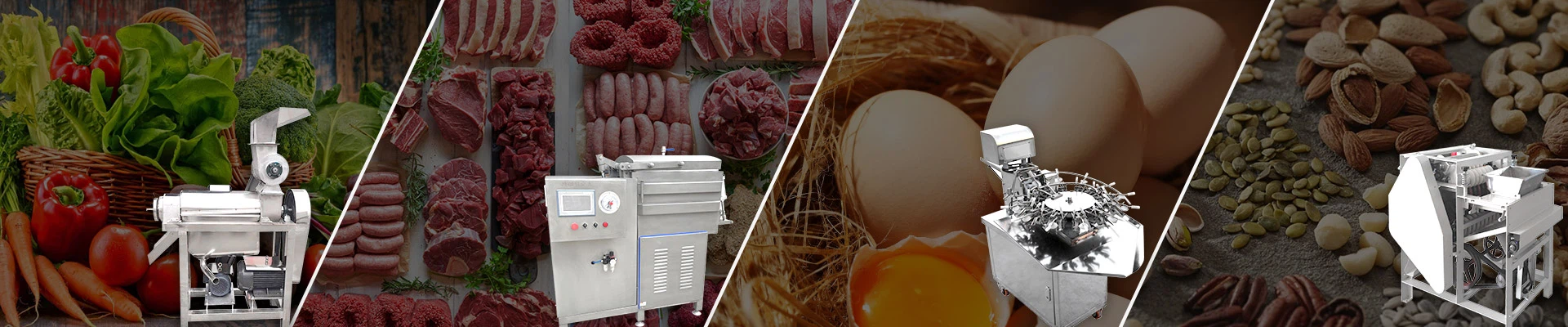
Before using the groundnut sheller machine, first, check whether all fasteners are tightened, whether the rotating parts are flexible, whether there is lubricating oil in each bearing, and whether the peeling machine is placed stably. In order to ensure the safety of the operator, the motor housing must also be grounded (the motor housing is reliably connected to the grounding body with a wire).
Before powering on, the groundnut sheller machine should be turned several times by manpower. If there is a knocking sound, the cause should be found out and then the power is turned on.
Choose an appropriate screen according to the size of the peanut kernel.
After powering on, you should first test run and pay attention to whether the rotor is in the correct direction. After the motor is started, the direction of the rotor should be consistent with the direction marked on the machine. Run it idle for a few minutes to observe whether there is any abnormal sound. After the operation is normal and stable, the peanuts can be quantitatively, evenly, and continuously put into the feed hopper.

There are also requirements for the dryness and wetness of peanuts, that is, the peanuts should not be too dry or too wet. Too dry, the peanuts will have a high crushing rate; too wet, the shelling speed will slow down.
In winter, the peanuts stored in rural areas are generally dry. To make them dry and wet properly, the following method can be used: spray about 15 kg of warm water evenly on 100 kg of peanuts, cover them with plastic film for about 10 hours, and then dry them in the sun for about 1 hour before shelling. In other seasons, it only takes about 6 hours to cover with plastic film, and the rest of the operation method is the same.
The solution to the increase of the groundnut sheller machines in front of the oil press is to move the motor downward to tighten the fan belt and increase the air volume.


