

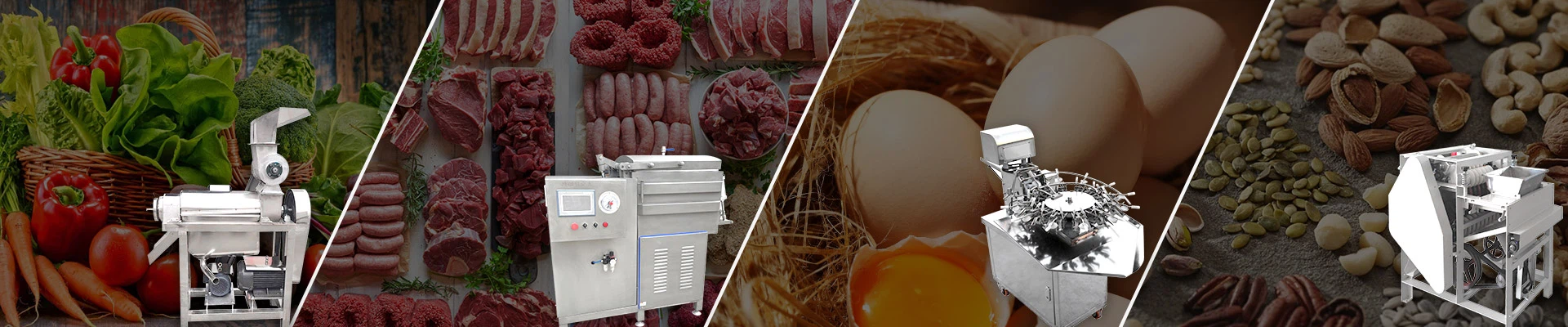
Egg processing machines play a crucial role in the modern food industry, offering numerous applications across various sectors. Here are some of the key applications:
Food Processing:
Liquid Egg Production:
Breaking and Separating: Machines efficiently break eggshells and separate yolks from whites, crucial for producing liquid egg products like egg whites, yolks, and whole eggs.
Pasteurization: Pasteurization machines ensure the safety of liquid egg products by eliminating harmful bacteria.
Freezing and Drying: Machines facilitate the freezing or drying of liquid eggs, extending their shelf life and enabling convenient storage and transportation.
Blending: Machines blend different egg components (yolks, whites) with other ingredients to create various food products.
Bakery and Confectionery:
Egg Mixing: Machines mix eggs with other ingredients like flour and sugar for baking cakes, pastries, and other baked goods.
Whipping: Machines whip egg whites to create meringues and other airy desserts.

Food Service:
Restaurants and Cafeterias:
Hard-boiled Egg Preparation: Machines streamline the preparation of hard-boiled eggs for breakfast buffets and other meal options.
Omelet and Scrambled Egg Preparation: Some machines can assist in the preparation of omelets and scrambled eggs, increasing efficiency in busy kitchens.
Pharmaceutical and Cosmetic Industries:
Pharmaceutical Applications:
Egg-based Medications: Some medications are derived from egg components, and processing machines are used in their production.
Cosmetic Applications:
Egg-based Cosmetics: Egg components are used in the production of certain cosmetics, and processing machines facilitate their extraction and formulation.
Benefits of Egg Processing Machines:
Increased Efficiency: Automation significantly improves productivity and reduces labor costs.
Improved Quality and Consistency: Machines ensure consistent product quality and minimize human error.
Enhanced Food Safety: Automated processes minimize the risk of contamination and ensure compliance with food safety regulations.
Extended Shelf Life: Processing techniques like pasteurization and drying extend the shelf life of egg products.
Reduced Waste: Efficient processing minimizes waste and maximizes the utilization of valuable egg resources.
Egg processing machines play a vital role in the food industry and beyond. They enable efficient and safe production of a wide range of egg-based products, contributing to the global food supply chain and supporting various industries.


