

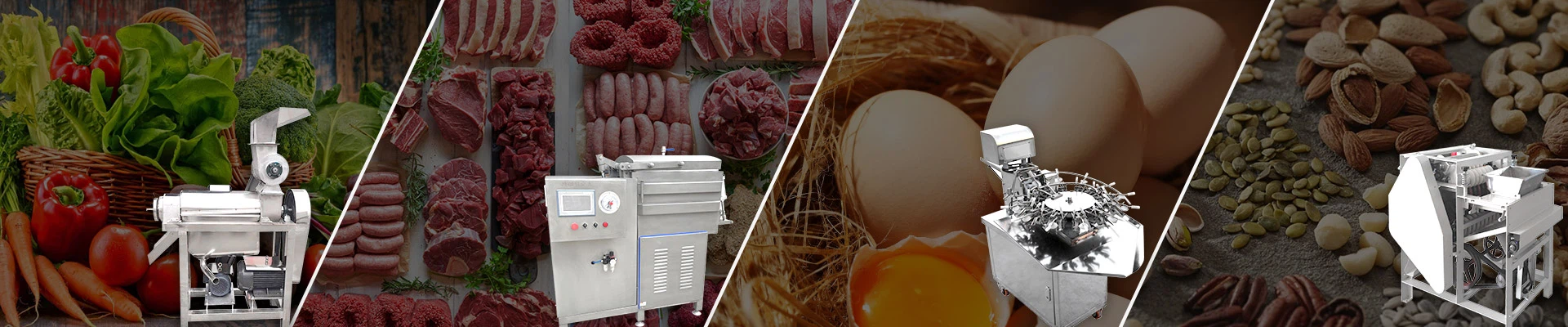
A commercial mango pulper is a specialized machine designed to extract pulp from mangoes by separating the seeds and skins from the edible, fibrous pulp.
These machines play a vital role in the fruit processing industry, especially in the production of mango pulp, juice, puree, nectar, and other value-added products. Understanding how a commercial mango pulper works is essential for operators, buyers, and food processors aiming for efficiency, high yield, and quality.
Overview of the Mango Pulping Process
The working of a commercial mango pulper can be broadly divided into the following steps:
Feeding
Crushing or slicing
Pulp extraction
Sieving and separation
Discharge of pulp and waste
Each of these steps is executed using integrated components that are typically engineered for durability, hygiene, and efficiency.
Feeding Section
The process begins with feeding mangoes into the machine's hopper, usually located at the top. These mangoes can be fed manually or via a conveyor system. Depending on the model, the mangoes may be whole, pre-peeled, or pre-stoned. However, most commercial machines are designed to handle whole ripe mangoes, thanks to their internal crushing and separation mechanisms.

The hopper guides the fruit into the processing chamber.
Some pulpers may include a crusher or slicer that slightly breaks down large mangoes for smoother pulping.
Pulp Extraction Mechanism
Once inside the machine, mangoes enter a cylindrical processing chamber where the main pulping occurs. This chamber contains the core components:
Rotor or beater blades: These high-speed rotating blades smash, crush, or beat the mangoes against a sieve or screen.
Sieve or perforated screen: A cylindrical or semicylindrical mesh filters out unwanted materials like seeds, skins, and large fibers while allowing the pulp to pass through.
As the mangoes are crushed by the blades, the pulp is forced through the mesh holes by centrifugal force or mechanical pressure.
The pulp that passes through the sieve is collected in a discharge outlet and directed toward collection tanks or pipelines.
The remaining residue - mainly peels and seeds - is expelled through a separate waste outlet.
This design ensures that the pulp and waste are separated simultaneously, optimizing throughput and reducing manual intervention.
Sieving and Texture Control
The mesh size of the screen determines the texture and fineness of the pulp. A finer mesh yields smoother pulp, suitable for juices and baby food, while a coarser mesh retains more fiber, ideal for purees and concentrates.
Automation and Controls
Modern commercial mango pulpers often include electrical or digital control systems that allow the operator to manage:
Rotor speed
Pulp discharge timing
Temperature controls (if integrated with pasteurizers)
Overload protection
These controls ensure consistent operation, energy efficiency, and operator safety. Some advanced systems are equipped with PLC-based automation for integration into a larger fruit processing line.


